
Topic insights
Sole hygiene before entry
Organic residue, bacteria, dust and pesticides carried on soles: evidence and strategies for managing the transition into the home.
Published dossiers
Studies and guidance for your entrance.
Explore outdoor residue, return-home routines and criteria for assessing an entrance solution. Each topic links to the relevant studies and guidance.
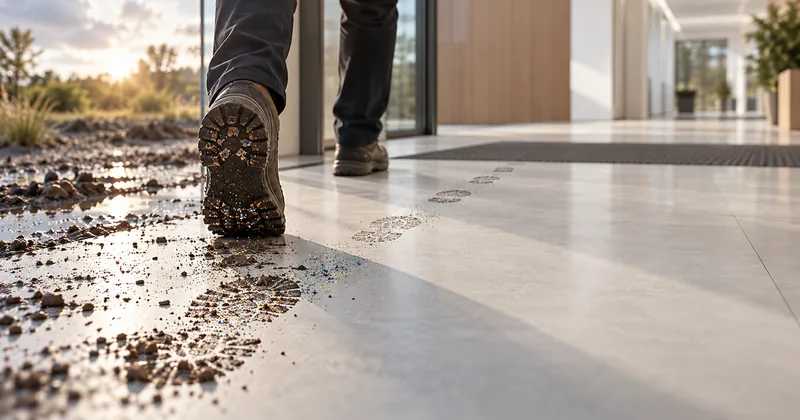
How long do particles stay on shoe soles? Why recent steps matter
Particles on shoe soles can be lost and replaced rapidly while walking.
Read the dossier →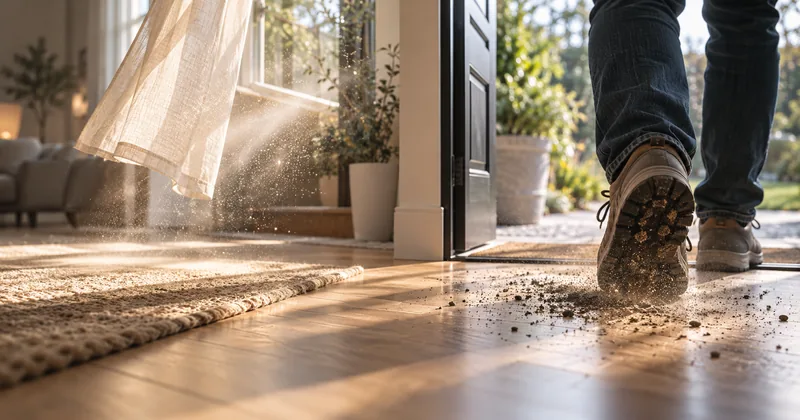
Outdoor dust indoors: does it come through shoes or air?
Air, track-in and indoor sources: why house dust is a mixture.
Read the dossier →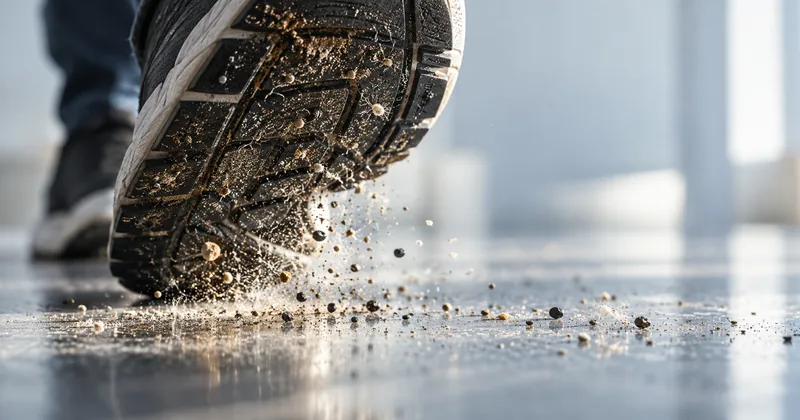
How do particles transfer between shoe soles and floors?
Pickup, release and redistribution: how particles move between soles and floors.
Read the dossier →
Pollen indoors: can shoes and clothes carry it?
Shoes, clothing and ventilation can all contribute to pollen in indoor dust.
Read the dossier →
Does walking resuspend dust from the floor?
What studies show about walking-induced dust resuspension and the role of flooring, humidity and particle size.
Read the dossier →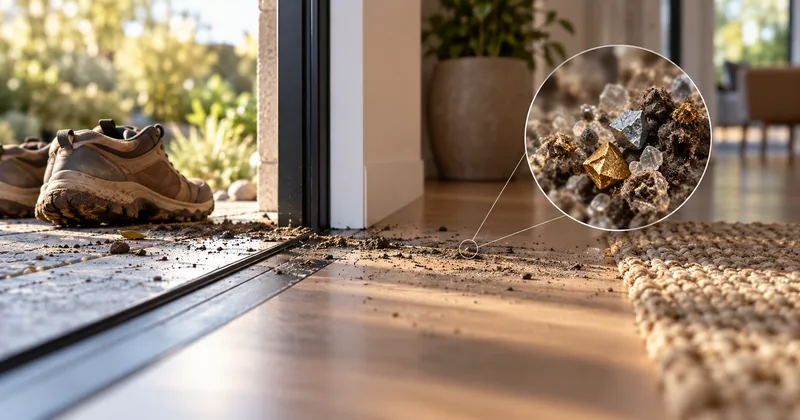
Lead and metals in house dust: how much does outdoor soil matter?
Outdoor soil, footwear track-in and indoor sources: why lead and other metals in house dust do not all come from the same place.
Read the dossier →
Pesticides in house dust: how can they get indoors?
Household use, soil, air, shoes and pets can contribute to residues in indoor dust: detection and risk are not the same thing.
Read the dossier →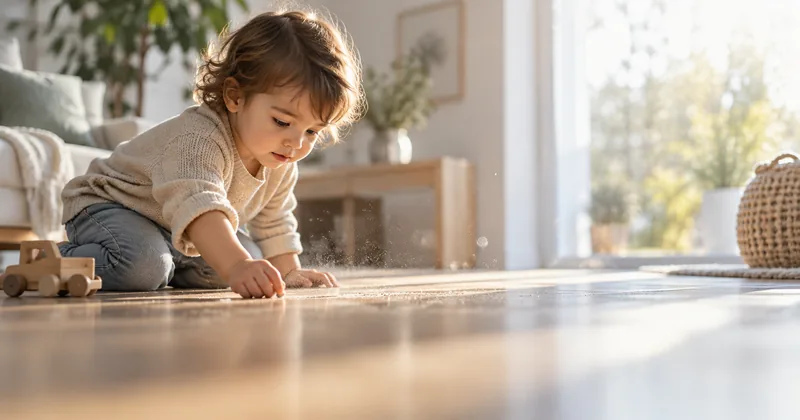
Children and floor dust: why exposure differs from adults
Crawling, floor play and hand-to-mouth activity make children’s interaction with dust different from that of adults.
Read the dossier →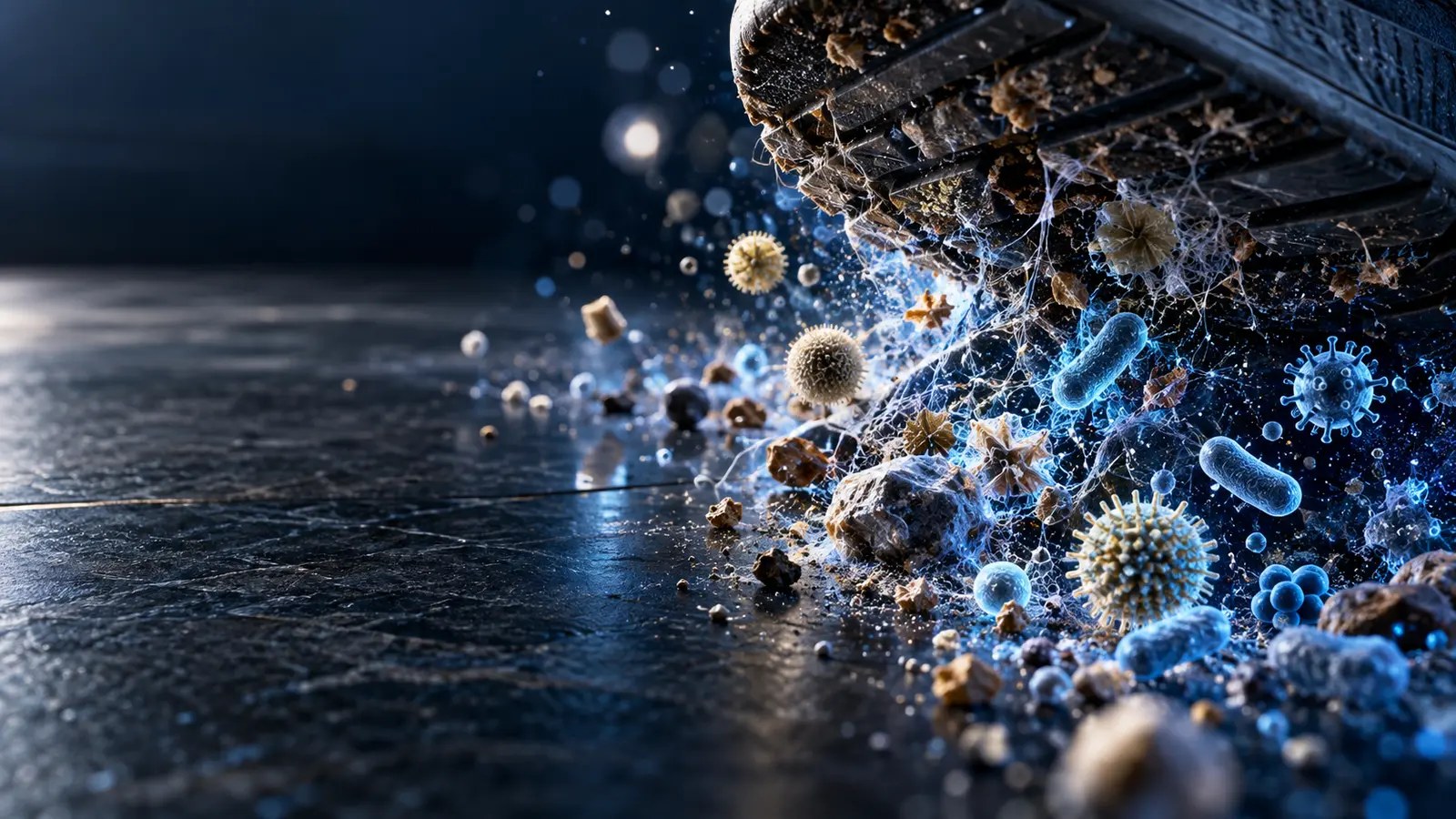
What do shoe soles bring indoors?
Visible dirt, particulates and evidence on environmental transfer.
Read the dossier →
Remove shoes or clean the soles?
Two different strategies for managing the household threshold.
Read the dossier →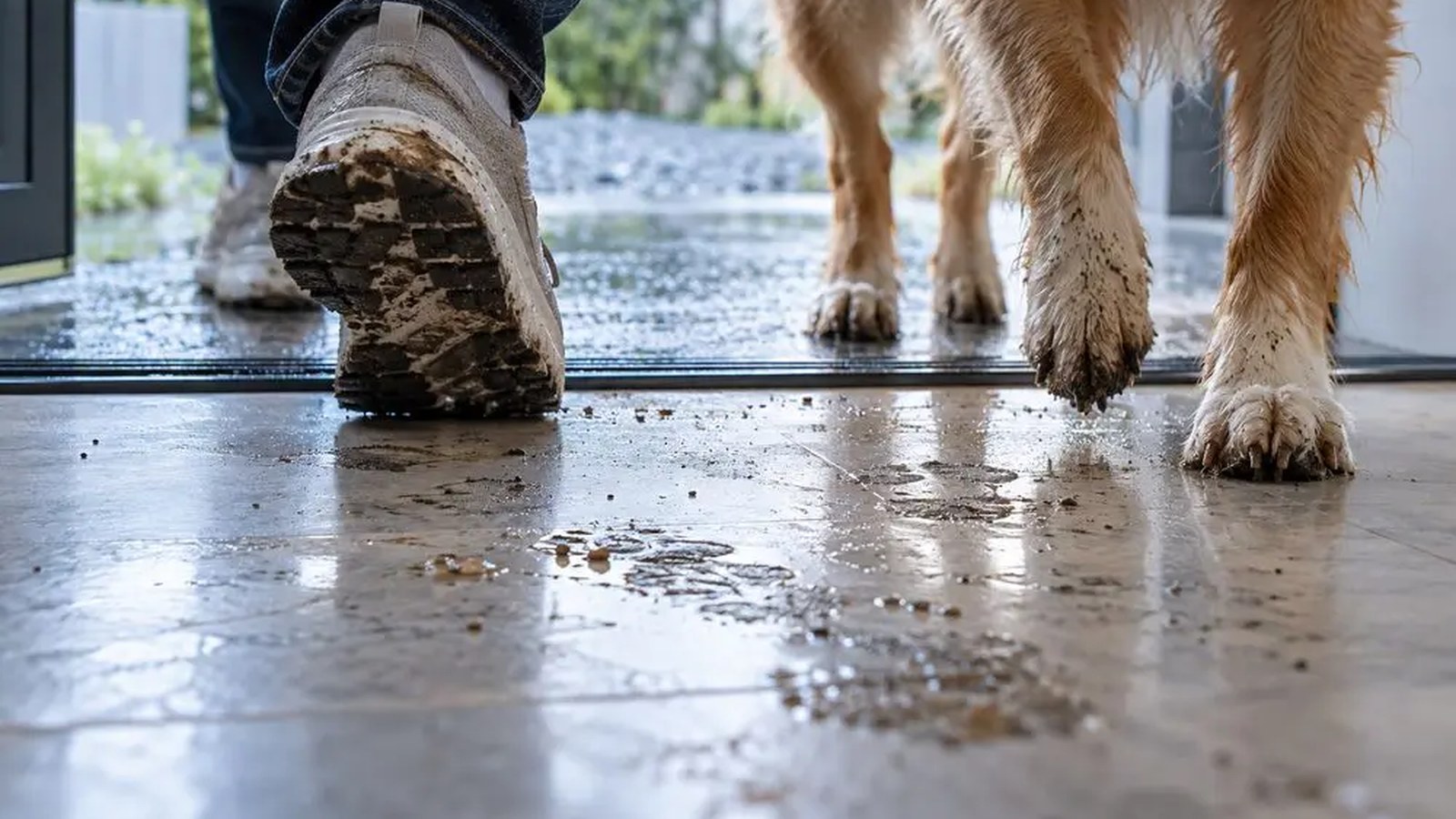
Entrance mats: what they capture and where they fall short
An entrance mat is neither useless nor universal; it is a passive first barrier within a broader threshold-management strategy.
Read the dossier →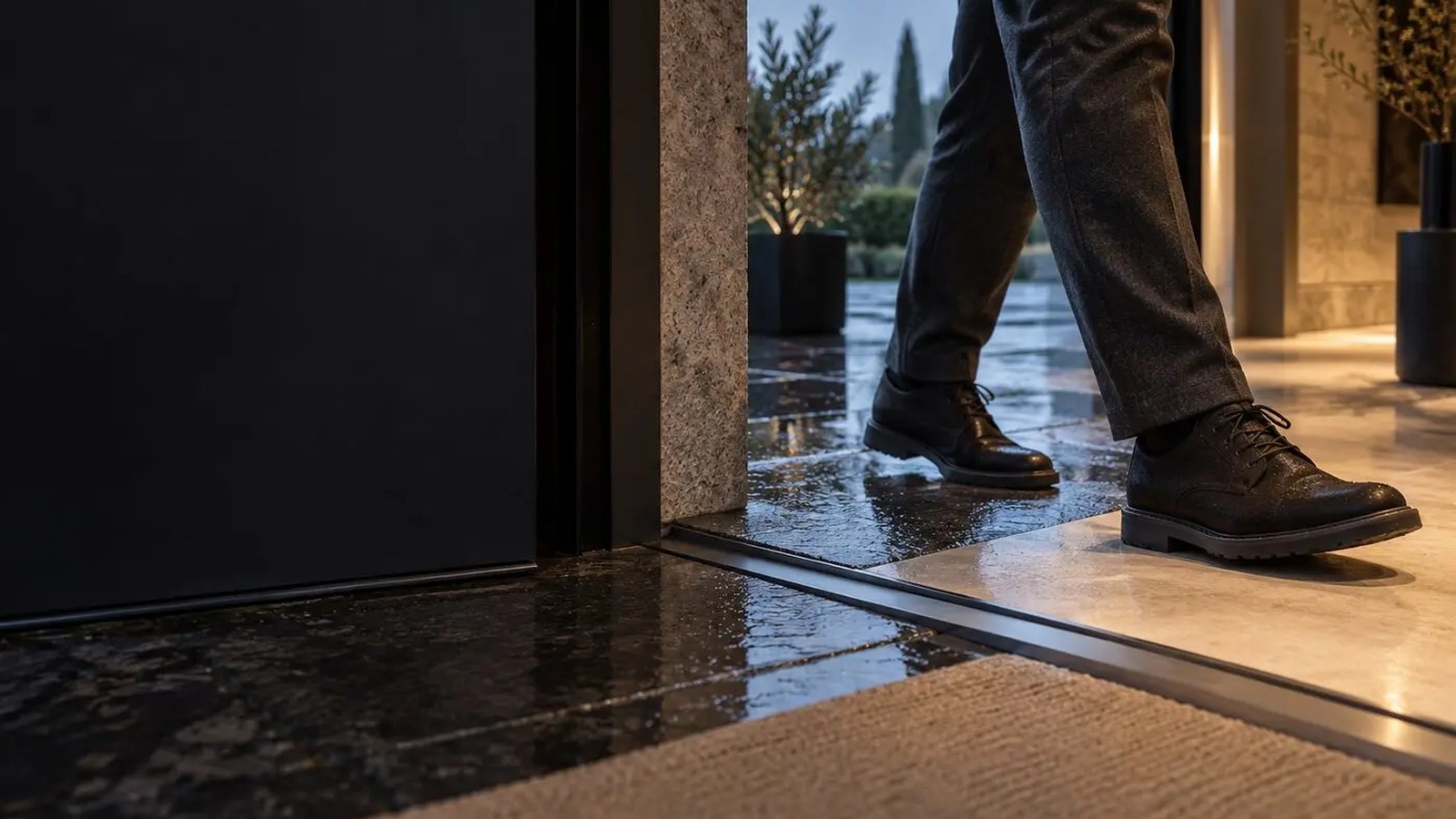
Wet shoes and rain: how to manage the home entrance
A good entry routine separates three functions: intercept water, remove attached material and let footwear dry without spreading moisture.
Read the dossier →
Shoes indoors: habits, culture and entry hygiene
A shoes-off rule works when it suits the people and setting; footwear hygiene also considers how to manage the threshold when shoes remain on.
Read the dossier →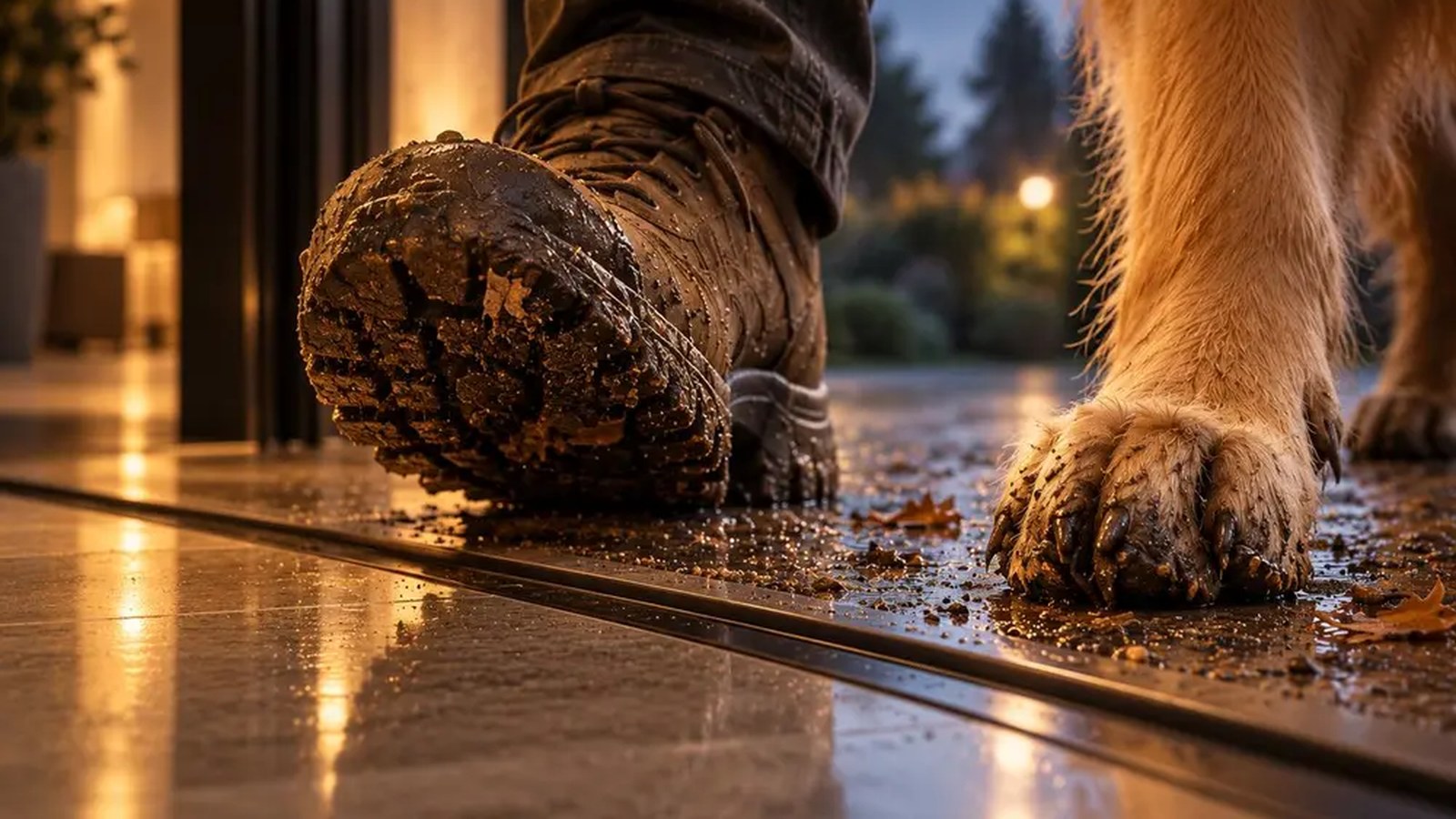
How to clean shoe soles at the entrance: methods and limits
Brushing, matting, rinsing and active systems work in different ways. The 2016 review did not identify a consistently effective shoe-sole disinfection strategy in the included studies.
Read the dossier →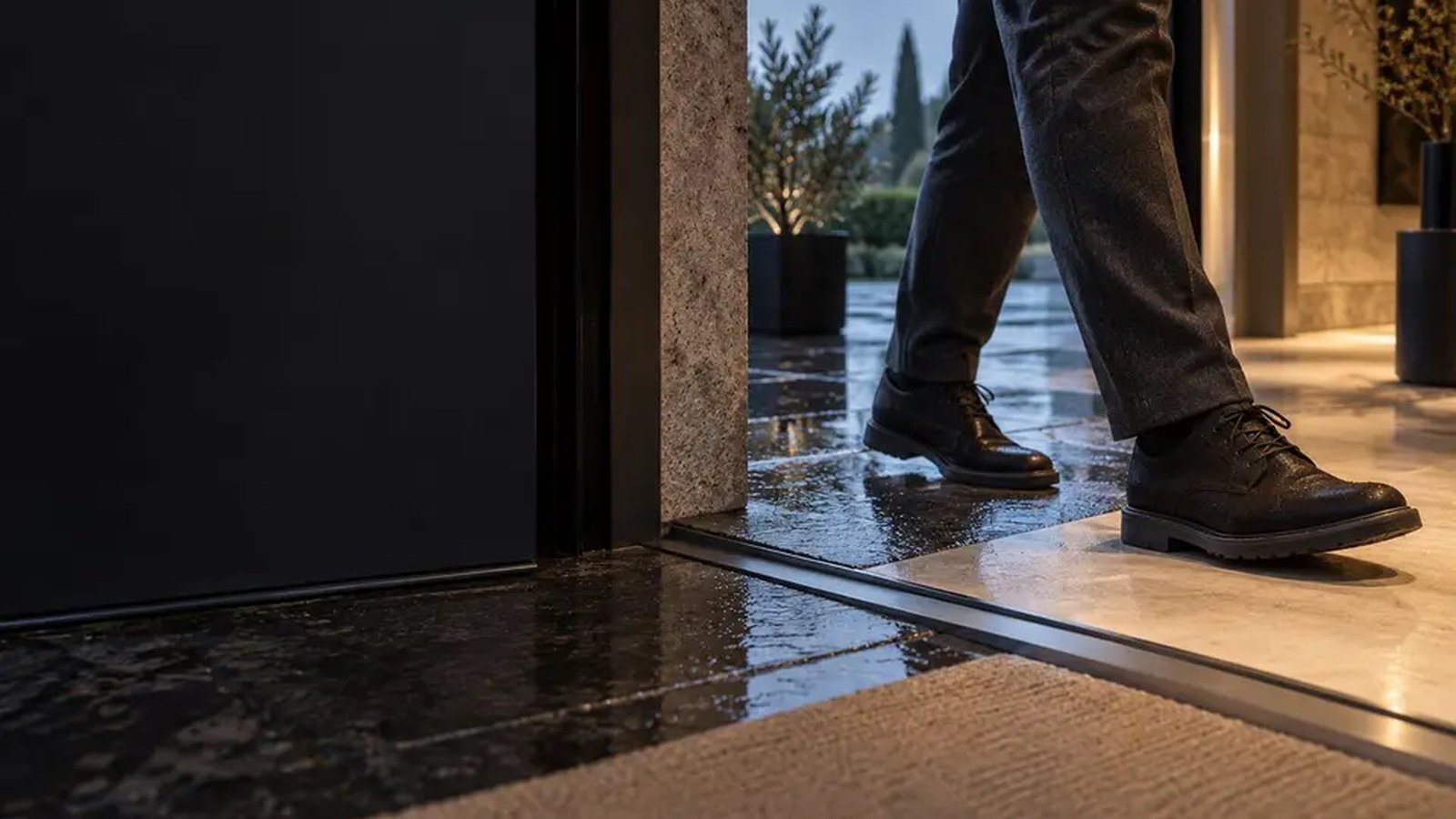
Designing the home entrance as a threshold-hygiene zone
The threshold works better when sequence, space and tools follow natural human behaviour.
Read the dossier →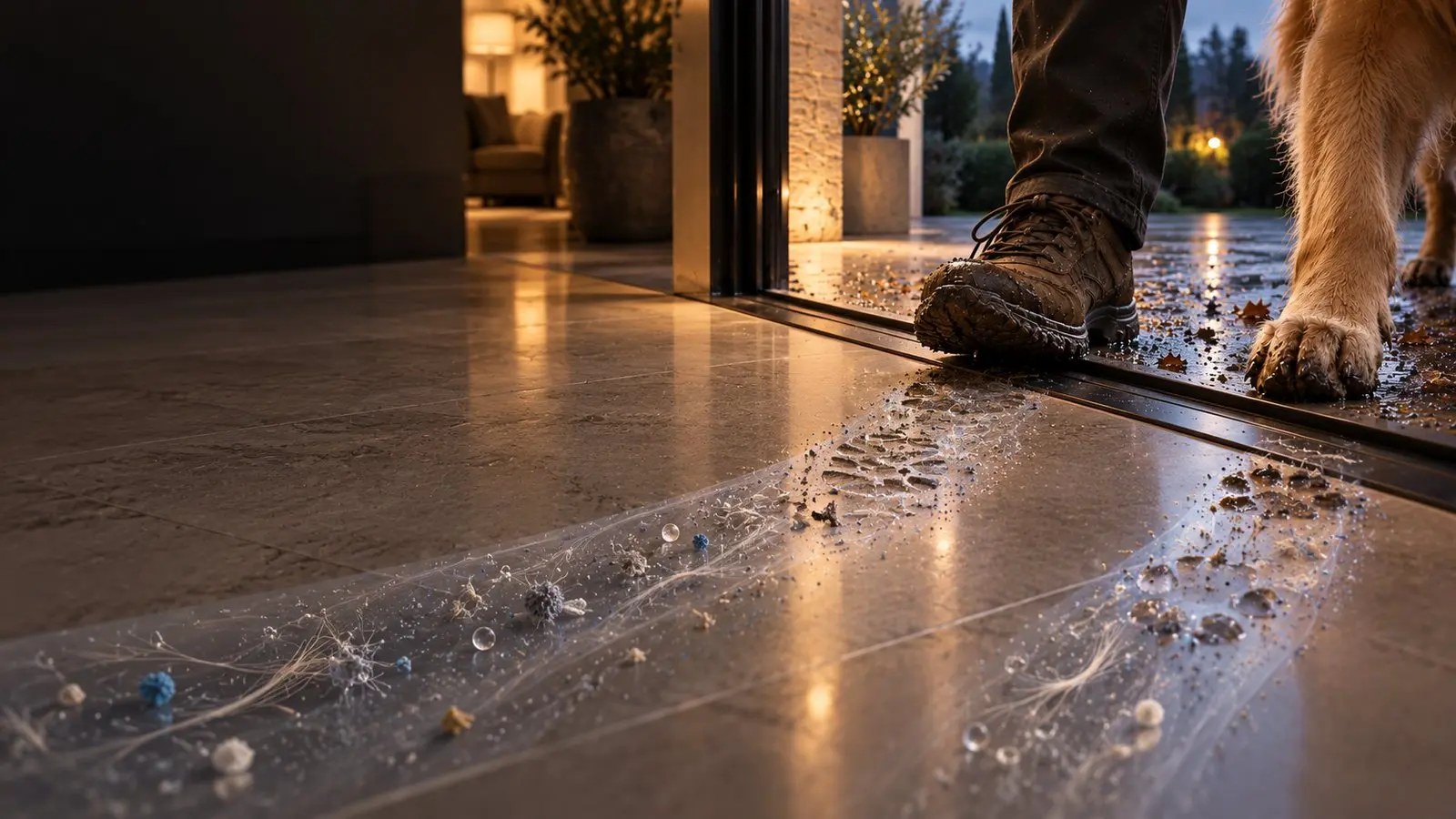
Shoe-sole dust and the indoor microbiome: what we know
In one specific study, shoe-sole dust contributed about 4% of airborne bacteria and 14% of airborne fungi: interesting findings, not universal percentages.
Read the dossier →