 01
Mud and organic residue
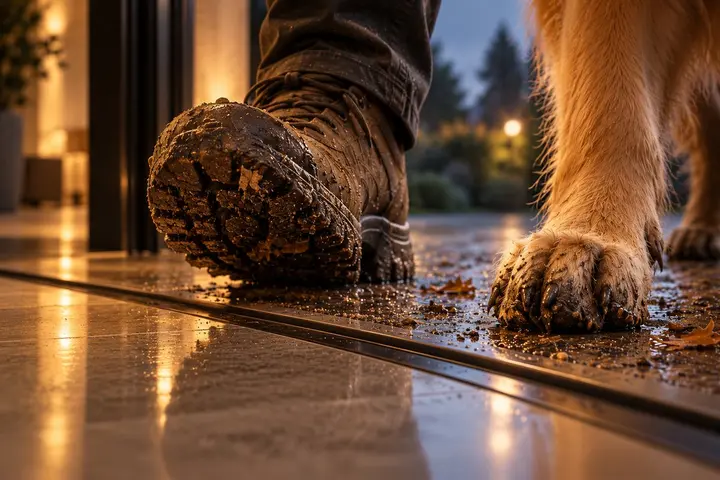
Contact with soil and dirty surfaces can leave attached organic residue, even when the visible trace is small.


Hygiene at the entrance
HYGEN KLINX develops automated solutions for treating paws and footwear at the point of entry to homes and buildings.
HYGEN KLINX · OFFICIAL VIDEO
An introduction to the platform, the entrance-hygiene challenge and the development direction of HYGEN KLINX.
The entrance hygiene challenge
Pavements, parks and public spaces can leave more than mud and water: organic residue, dust, microorganisms and substances on the surfaces crossed. Soles and paws can carry them through the door.
01Contact with soil and dirty surfaces can leave attached organic residue, even when the visible trace is small.
 02
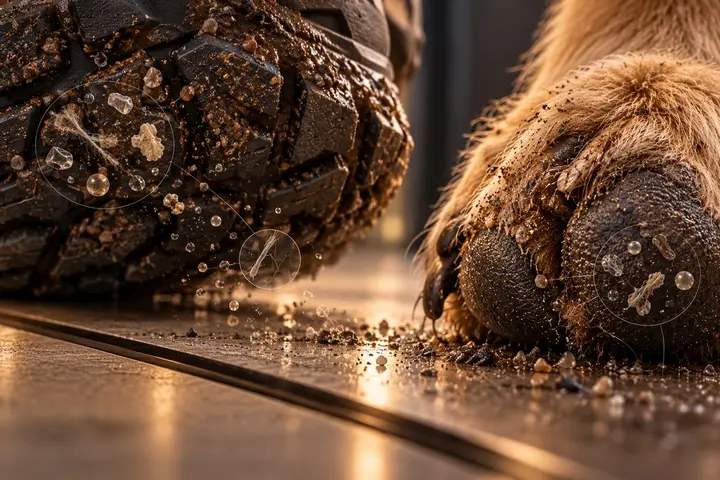
A dry sole may still carry dust, microorganisms and residue from areas treated with pesticides.
 03
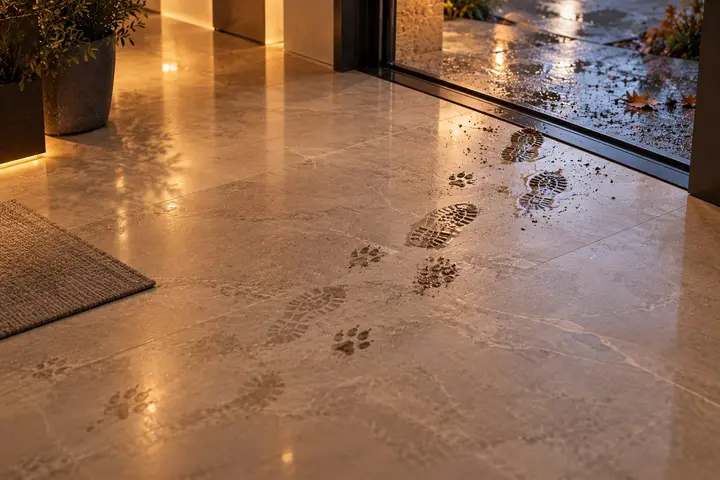
Further steps can distribute residue across the floors where we live, walk and play.
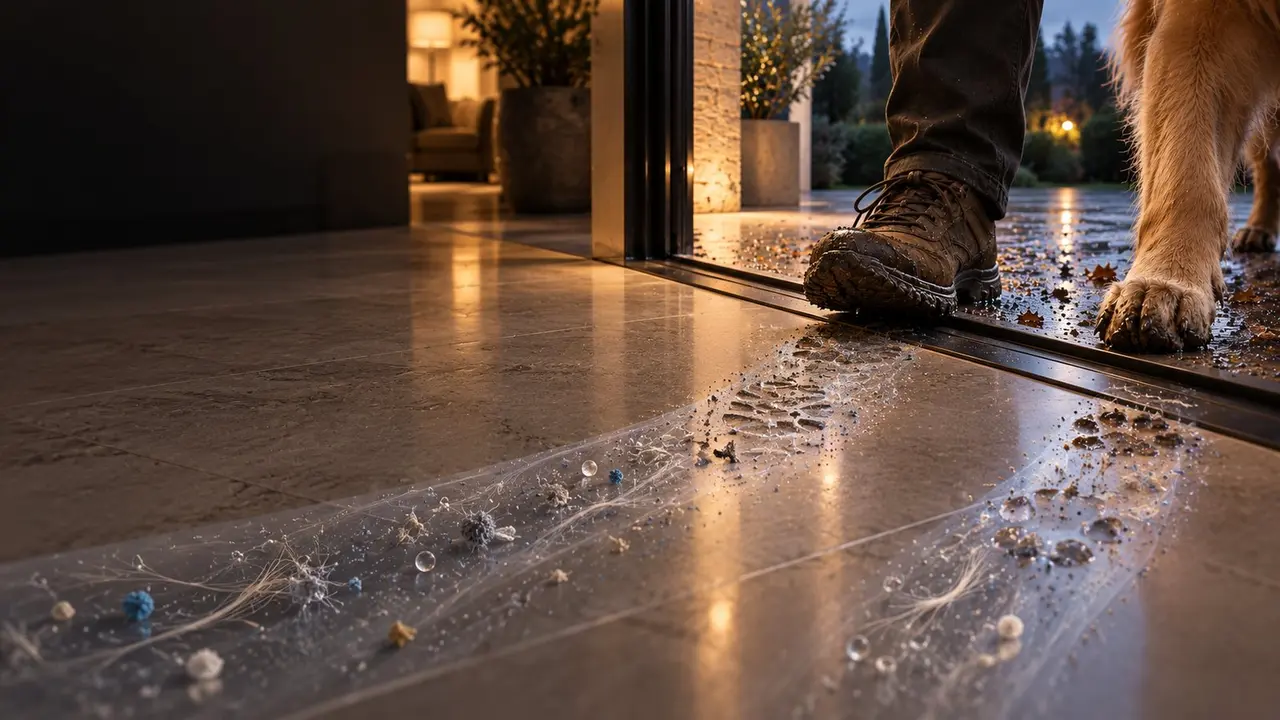
What the eye cannot see
HYGEN KLINX is being developed to act on soles and paws at the transition to indoor spaces. Residue removal and treatment performance will be measured on actual prototypes and products.
Prototypes and dedicated tests will measure residue removal, safety and treatment performance.
What can reach the entrance
The sources describe different contaminants and settings. Bacteria, viral material and pesticide residue require distinct measurements; visible marks reveal only part of what may be carried inside.
Organic material may be present on outdoor surfaces. Contact can leave residue on soles and paws, even when little is visible.
Bacteria and spores have been detected on soles and paws. Viral material has been detected on soles in hospital wards: the finding relates to that setting.
Studies of treated lawns documented the herbicide 2,4-D being carried into homes by footwear and animals. Transfer depends on exposure and the route travelled.
Studies and sources. Explore findings on soles, paws and transfer into indoor spaces. View the sources.
Contaminants and transfer
Soles and paws can bring material collected outside into indoor spaces. Evidence helps distinguish organic residue, biological contamination and chemicals, and understand what should be measured at the entrance.

Soles and paws may touch surfaces containing organic material, soil and water. Some attached material can continue into indoor spaces on the return home. A visible mark makes the phenomenon obvious; its absence does not measure what may remain on the surface.
The origin of contamination matters: public-health sources document that biological material of animal origin can contribute to contamination of water and soil. This is an environmental finding and does not, by itself, establish a household health risk.
The systematic review by Rashid and colleagues identified 13 studies of infectious agents on soles across different settings. Documented organisms included C. difficile, methicillin-resistant Staphylococcus aureus and multidrug-resistant Gram-negative bacteria.
A household study involving 20 families in Slovenia also detected C. difficile in 6 of 25 dog-paw samples and 19 of 44 shoe samples. These findings concern contamination in the samples studied. They are not percentages applicable to every dog, shoe or home.

In COVID-19 wards in Wuhan, Guo and colleagues detected SARS-CoV-2 genetic material on staff shoe soles in 2020. The finding makes viral contamination of hospital footwear a concrete issue.
PCR detected RNA and did not indicate the amount of viable virus. The finding documents genetic material on the sampled soles; it does not establish household infection through footwear.
Nishioka and colleagues measured the herbicide 2,4-D entering homes after lawn applications. The study included 11 occupied and two unoccupied houses: the compound was detected in indoor air and on indoor surfaces. Transport by an active dog and the applicator was among the most significant factors.
The US EPA includes contaminated soil and dust tracked in from outdoors among possible sources of indoor pesticides. The issue therefore needs to be interpreted through the substance, treated area and route: the finding does not imply that every entrance brings the same quantity or type of residue.
The transition into the home connects what soles and paws encounter outside with the floors we use every day. Floor cleaning, footwear habits and paw care remain part of everyday management. An entrance solution must fit this routine with measurable functions and outcomes.
HYGEN KLINX develops PET KLINX and HOME KLINX for automated paw and footwear treatment at the entrance. Tests will need to measure residue removal, microbiological performance and safety of use separately.
How the concept works
The concept includes positioning, containment, dedicated treatment and reset. The sequence will be assessed through prototyping and testing.
Detect entry and activate the dedicated solution.
Manage treatment within a defined area before entry.
Apply a sequence designed for paws or footwear.
Prepare the system for the next use.
The HYGEN KLINX platform
PET KLINX and HOME KLINX share one vision: reducing the transfer of dirt and residue into indoor spaces.
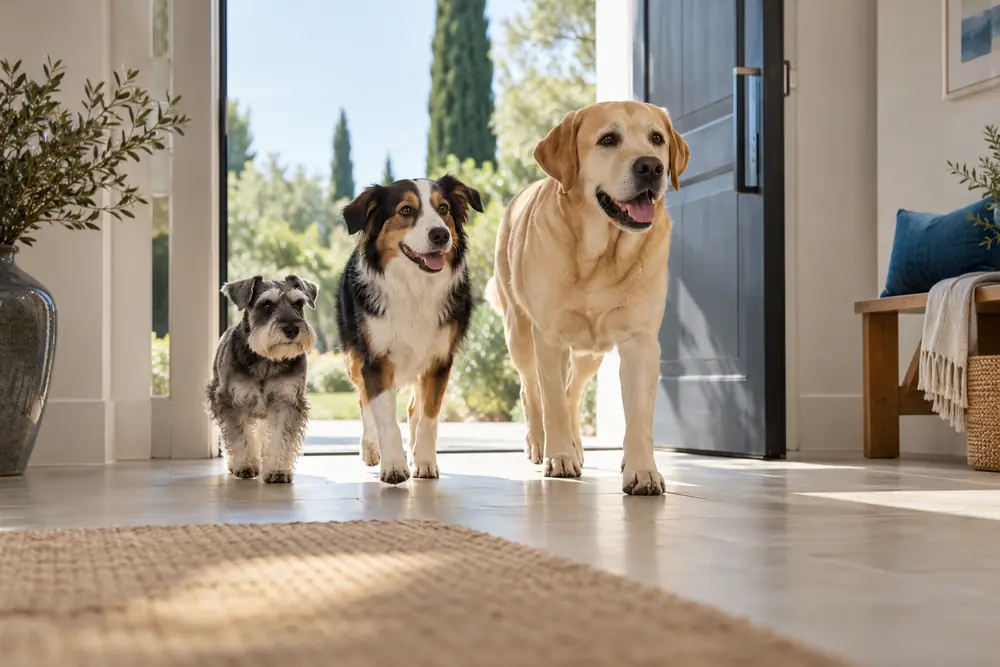 Paw hygiene solution
Automated paw treatment.
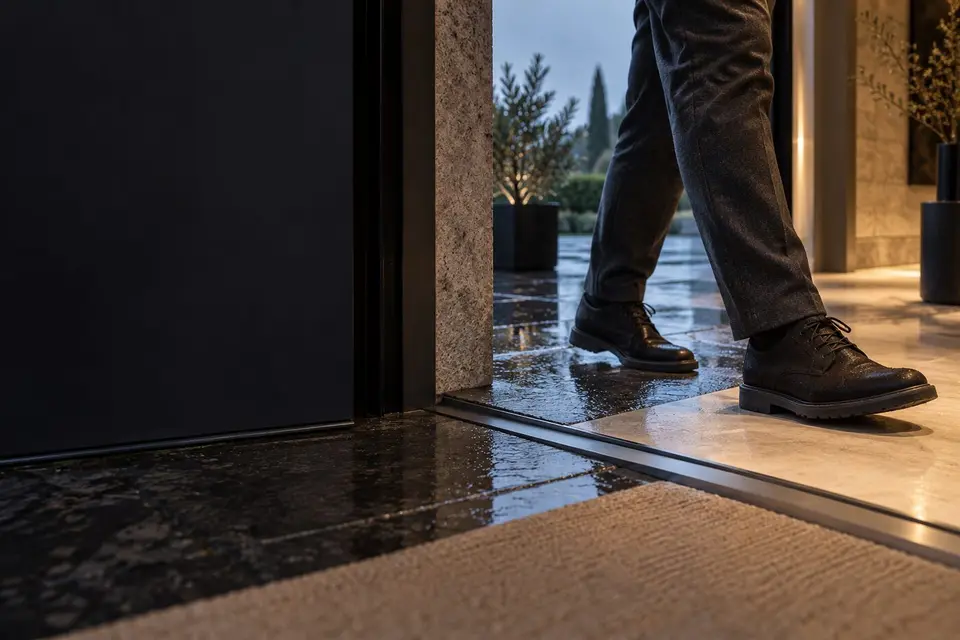 Footwear hygiene solution
Automated footwear treatment.
Configurations
One vision, configured around the setting, its users and the flow of people.
For homes and private spaces: a dedicated solution integrated directly into the entrance.
For residential buildings, hospitality, workplaces and infrastructure with frequent shared access.
Building applications
Residential buildings, hospitality, workplaces and infrastructure require different flows, integration and management. Building brings HYGEN KLINX technology to shared entrances.
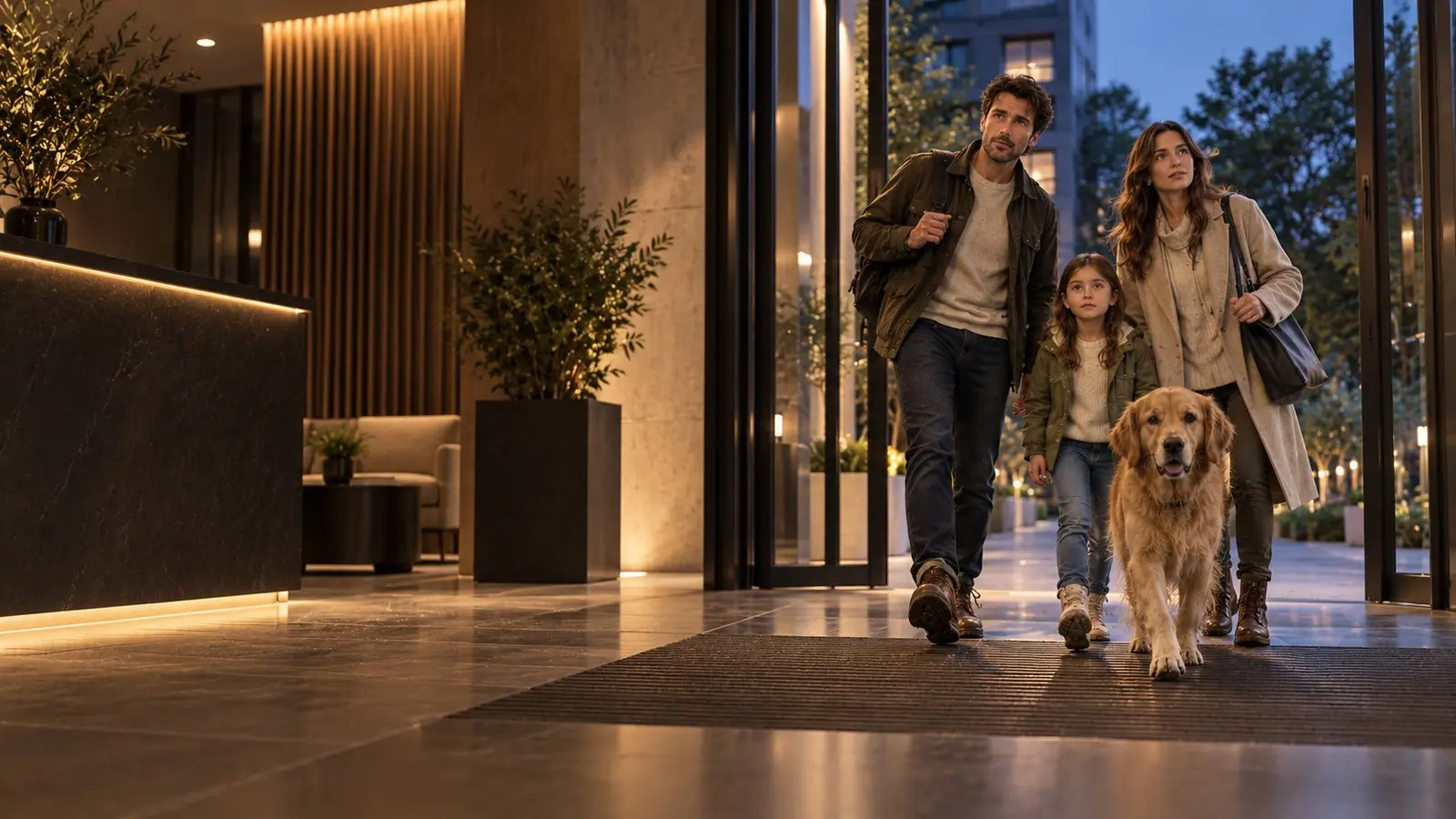
Our vision
“Transforming the entrance into a new standard of hygiene.”
HYGEN KLINX began with a simple question: why does the transition from outdoors to indoors still depend almost entirely on manual actions? Our vision is to make entrance hygiene more natural, automated and integrated into everyday life.
Frequently asked questions
Products, configurations and project status: everything you need to understand HYGEN KLINX and choose how to follow its development.
View developmentA platform of automated solutions for treating paws and footwear, with configurations for homes and shared entrances. The project is currently in development and validation.
The system coordinates four functions: correct positioning, process containment, dedicated treatment and reset for the next use. Final specifications will be communicated after prototyping and validation.
PET KLINX is designed for automated paw treatment. HOME KLINX is designed for automated footwear treatment. Both share the same platform logic.
Standalone is a configuration for an individual entrance. Building extends the vision to residential buildings, hospitality, workplaces and infrastructure with shared access.
PET KLINX and HOME KLINX are not yet available for purchase. Development, prototyping and validation come before a launch timeline is defined.
Complete the form and select PET KLINX, HOME KLINX, Building Solutions or Industrial Partnership. To discuss an investment opportunity, use the dedicated Investor Relations page.
Register your interest
Choose PET or HOME Early Access, discuss a Building project or propose a partnership. We will contact you only about your selection. Early Access registers interest in products in development; it is not a purchase or guaranteed product access.