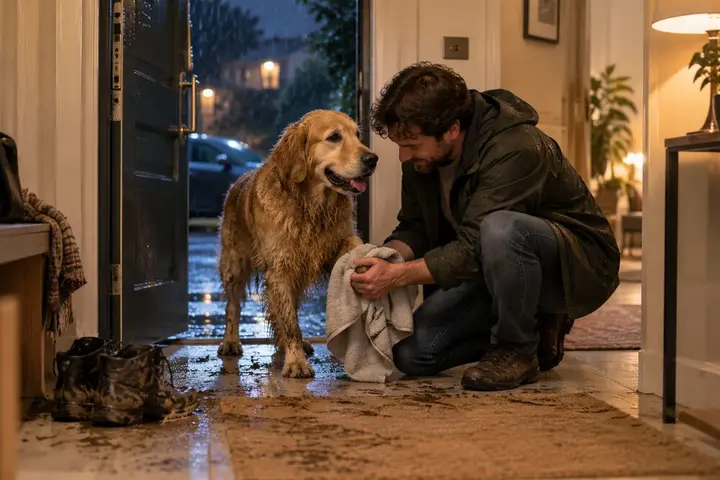
Manual process
Contact with the route
Faeces, urine, soil and water may be present in the places crossed during a walk.

PET KLINX · Paws
Mud, traces of faeces and urine, dust and residue from outdoor surfaces can remain on paws. PET KLINX is in development for automated treatment at the entrance. Indicative design range: approximately 5–45 kg, to be validated.
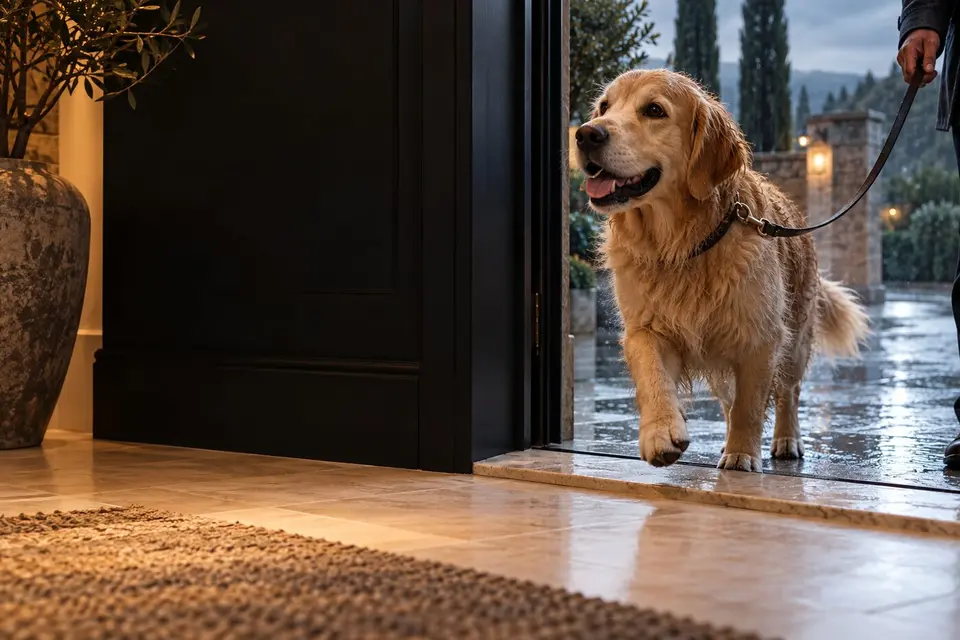
PET KLINX · VIDEO
A short story about the everyday moment behind PET KLINX: the transition between the outdoors and the home.
The everyday problem
Paws cross pavements, green spaces and soil. They may collect organic residue, dust and material from treated surfaces. Returning home is when that material may reach indoor floors.
Faeces, urine, soil and water may be present in the places crossed during a walk.
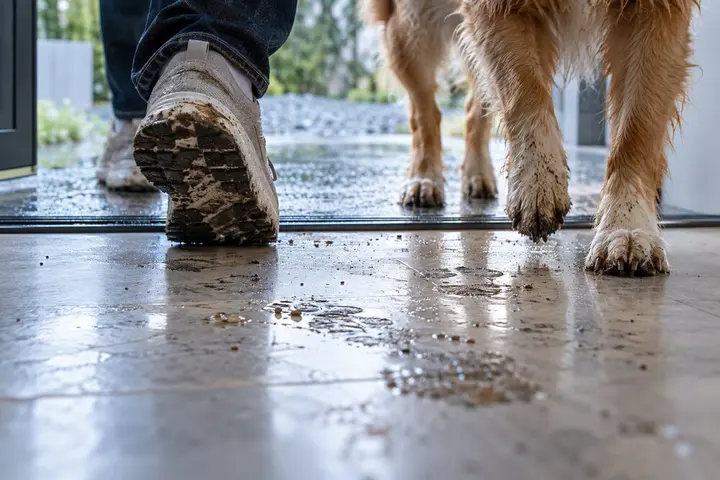
Studies of dog paws have detected microbiological contamination in specific samples and settings.
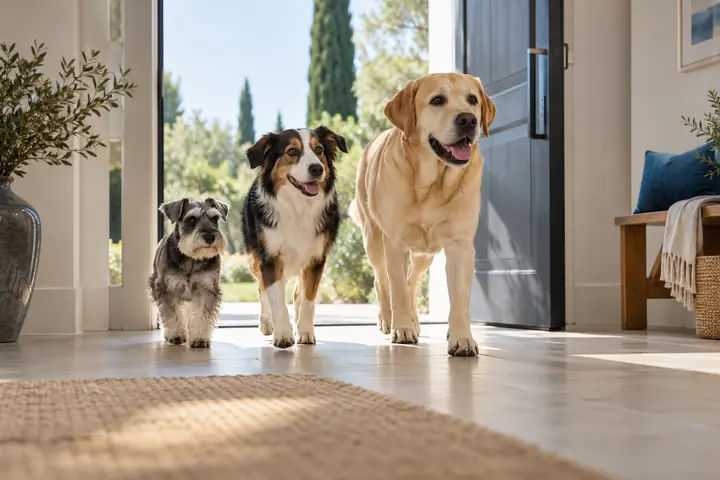
The design target spans different sizes and anatomies, to be verified through dedicated testing.
Contaminants and transfer
Faeces and urine, bacteria and spores, pesticide residue: returning home connects what a dog encounters outside with household floors. The route, ground and walking conditions help explain what may remain on paws.

Paws rest directly on the surfaces along a route. Soil, water and traces of faeces or urine may be present in the same place; some material can remain attached between pads and fur. The type of residue depends on the places crossed and the conditions during the walk.
The CDC describes urine from infected animals as a possible source of water and soil contamination by the bacteria that cause leptospirosis. This is a concrete example of why the origin of residue matters. It is not proof of household infection through paws and does not describe every dog or route.
A 2018 study of 20 households in Slovenia detected C. difficile in 6 of 25 dog-paw samples, or 24%, and in 19 of 44 shoe samples, or 43%. These percentages refer to those samples: they document the presence of this bacterium in a household setting, without estimating the probability of illness for a family.
A 2021 pilot involving assistance dogs and pet dogs instead found lower overall bacterial counts on paws than on their users’ or owners’ shoe soles. The two findings show why the dog, route, sample and method must remain part of the assessment.
In a 2001 study of the herbicide 2,4-D applied to lawns, transport by an active dog was among the most significant factors in the compound entering homes. Measurements covered indoor air, surfaces and household dust before and after treatment of outdoor areas.
The finding documents a transport route under defined conditions. It does not show that every walk leaves pesticides on paws. Knowing the route, ground and any treatment of the area helps distinguish mud, organic residue and possible chemicals.

Studies of surfaces and footwear may also document viral material. For example, a 2020 study in COVID-19 wards detected SARS-CoV-2 genetic material on staff shoe soles. This was hospital sampling using PCR.
The data concerns hospital staff footwear. PCR detects RNA and does not establish infectious virus; the study did not analyse dog paws or household transmission.
The entrance concentrates the transition from outdoor routes to domestic surfaces. A routine must be designed around the actual dog: residue type, anatomy, behaviour and comfort vary between animals. Paw treatment must respect this variability as well as manage what is collected outside.
PET KLINX is in development for automated treatment at the entrance. The indicative range of approximately 5–45 kg is a design target, not confirmed compatibility. Residue removal, any microbiological performance, acceptance and safety require distinct checks before launch.
The concept
The system guides the dog into the dedicated area.
The process remains within the dedicated area.
The sequence is designed for paws.
The system resets for the next use.
Designing for variability
Size, morphology, posture and familiarity with a new routine vary from dog to dog. Development considers this variability when assessing ergonomics, acceptance and treatment safety.

Visible and invisible
Dust, organic residue and material from the route can remain on paws even when they look dry. Returning home is the moment to check what the dog has picked up.
Traces of faeces and urine may be present on outdoor surfaces. Contact can leave residue on soles and paws, even when little is visible.
A household study detected C. difficile on dog paws. Another pilot found lower overall bacterial counts on paws than on shoe soles.
Studies of treated lawns documented the herbicide 2,4-D being carried into homes by footwear and animals. Transfer depends on exposure and the route travelled.
Studies and sources. Explore findings on soles, paws and transfer into indoor spaces. View the sources.
Study an interaction that is understandable, gradual and respectful of canine behaviour.
Verify ergonomics and compatibility across the planned range of sizes and morphologies.
Measure safety, reliability and performance through tests on the actual system.
Project status
PET KLINX is not yet available for purchase. The solution is progressing through the stages required to turn the concept into a verifiable product.
Design range
From small to large dogs: one platform designed for different anatomies. Compatibility requires morphological analysis and dedicated testing: weight alone does not establish it.

Explore the platform
PET KLINX · Early Access
Register your interest to be contacted about development and future access opportunities. The product is in development; availability and participation depend on validation.