
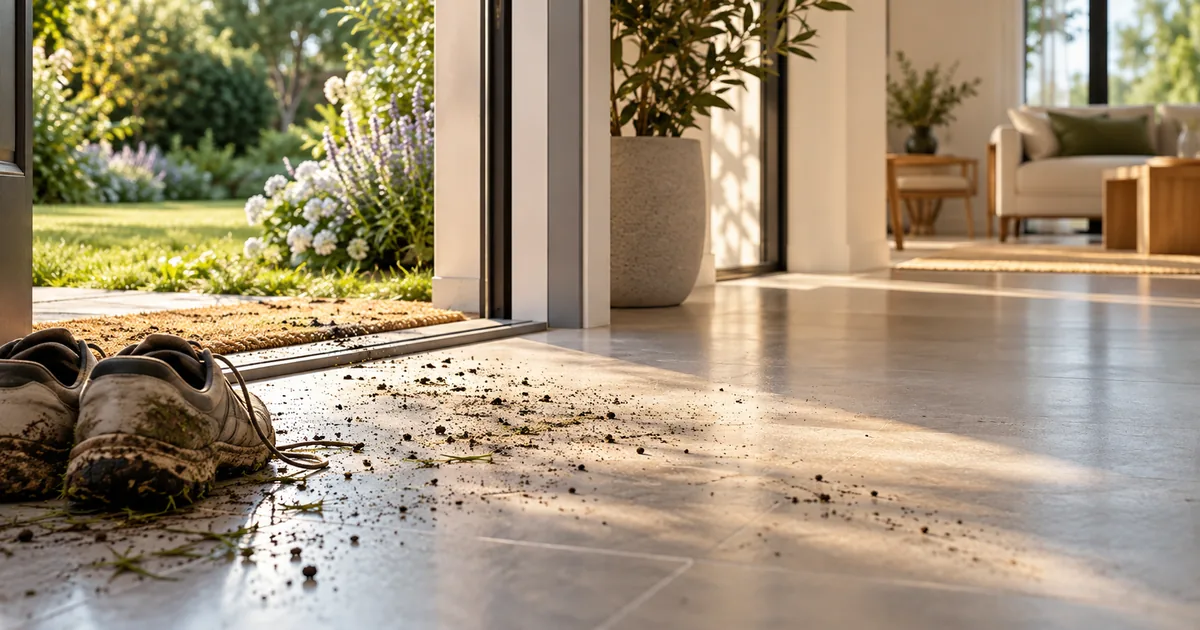
Outdoor track-in is a documented pathway, but it is not the only one. Detecting a pesticide in dust does not automatically identify its source, absorbed dose or health risk.
Products used indoors or on treated outdoor areas.
Air, soil, shoes, clothing and animals can contribute.
Surfaces and dust can retain residues over time.
Presence must be distinguished from actual dose and risk.
Indoor and outdoor sources can overlap
US EPA lists household use, stored pesticide containers, and contaminated soil or dust that floats or is tracked in from outside among possible sources of indoor pesticides. The same compound can therefore have more than one pathway indoors.
Transport from treated lawns has been measured
Studies of lawn-applied herbicides have documented residue transport indoors through shoes, human activity and animals. These findings apply to particular products, application conditions and study settings and should not be generalised to every pesticide.
Recent studies detect mixtures in house dust
A study of urban homes across the United States detected glyphosate and AMPA in the analysed dust samples, while noting that further work is needed to identify sources. A 2025 study in Belgium and the Netherlands found many pesticide residues in bedroom dust, with different associations for proximity to agricultural land and the presence of pets.
Pets and veterinary products can be another variable
Some pet-owning homes showed higher levels of compounds that are also used as biocides or veterinary flea-control products. This illustrates why a residue in dust cannot automatically be attributed to shoes or outdoor soil.
Detection does not automatically mean risk
Analytical methods can detect very small amounts. Risk assessment requires concentration, frequency, exposure route, toxicity and duration. Recent studies have found numerous residues while estimating low overall risk in most sampled homes, with exceptions tied to specific cases.
What entrance management can do
Reducing soil and dust tracked indoors can act on one possible transport pathway. It cannot replace correct product use, control of indoor sources or guidance from competent authorities.
Sources & evidence
- US EPA — Pesticides’ Impact on Indoor Air Quality
- US EPA — Residential Indoor Exposures of Children to Pesticides Following Lawn Applications
- Widespread occurrence of glyphosate and AMPA in indoor dust from urban homes
- Pesticide residues in bedroom dust: occurrence, determinants, and health risk assessment