
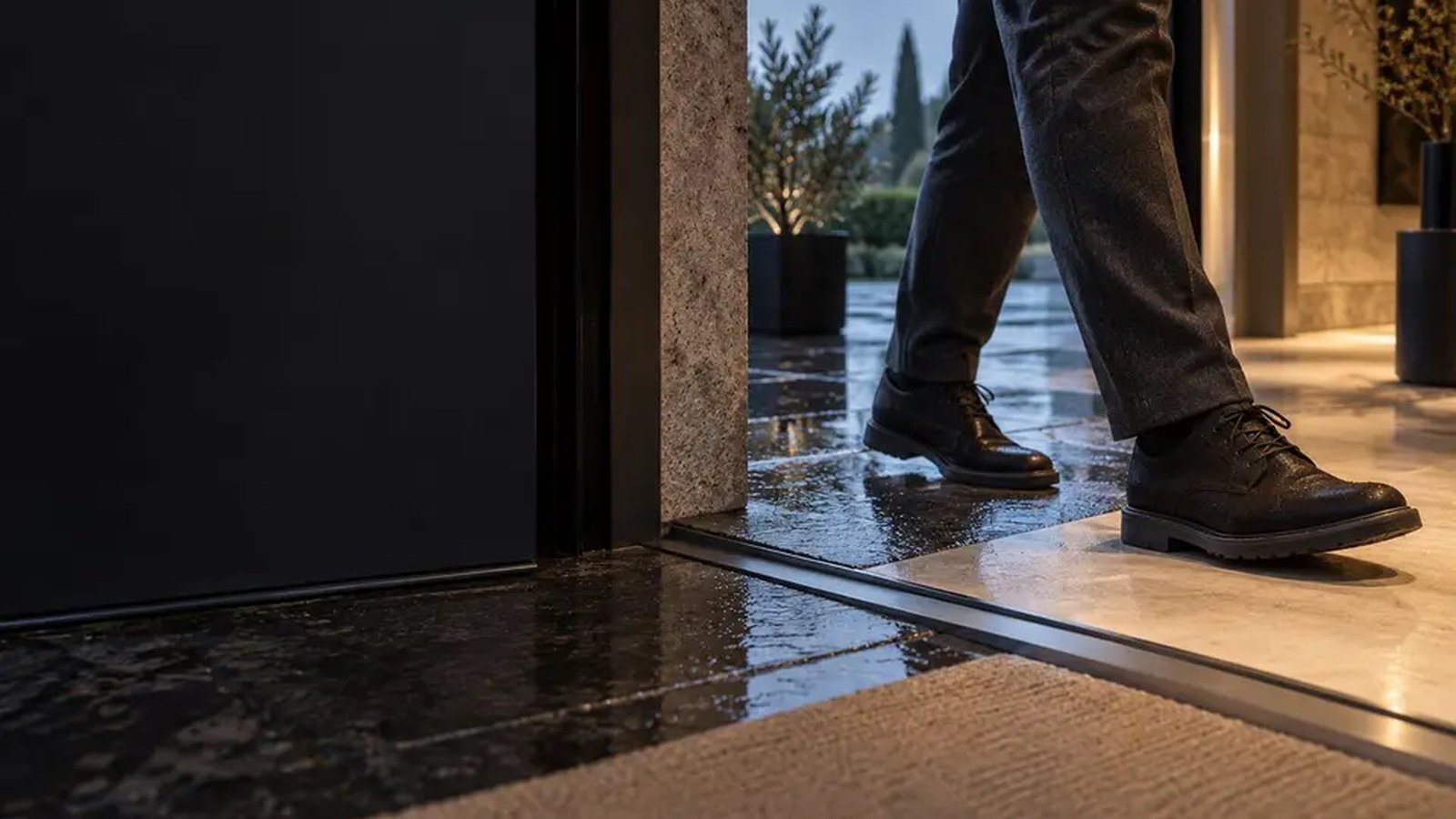
The threshold works better when sequence, space and tools follow natural human behaviour.
Soles contact changing surfaces and conditions.
Tread, moisture and attached material change the load.
The threshold can intercept before wider spread.
Behaviour and maintenance complete the strategy.
Think in sequences, not objects
Enter, stage, clean if needed, dry and continue: designing the sequence prevents each element from being added without a clear role.
Separate dirty and clean zones
You do not need a rigid barrier. It is enough for the most exposed items — wet shoes, umbrellas, leads — to have a defined place before the main indoor surfaces.
Size the zone for real routines
A family with children, a dog or frequent guests has different needs from a single occupant. The space should support common behaviour, not an idealised scenario.
Choose easy-to-maintain materials
Washable, drainable or quick-drying surfaces reduce the operational cost of the routine. Threshold design is also maintenance design.
From the home to entrance hygiene
Once the threshold is treated as a functional zone, the logic of entrance hygiene becomes clear: intervene before outdoor material spreads across much larger indoor areas.
Design a sequence, not a pile of accessories
A threshold zone works when each action has a place: wet-shoe parking, dirt interception, cleaning when needed, drying and movement into the home. Good layout reduces friction in the routine and keeps water and particles close to the door.
The threshold as a small domestic infrastructure
The goal is not to turn a home into a controlled environment, but to concentrate actions where outdoor material enters. Washable surfaces, enough space and simple maintenance matter more than any single accessory. Active technologies, if added, should fit the sequence and demonstrate their own performance.
Sources & evidence