
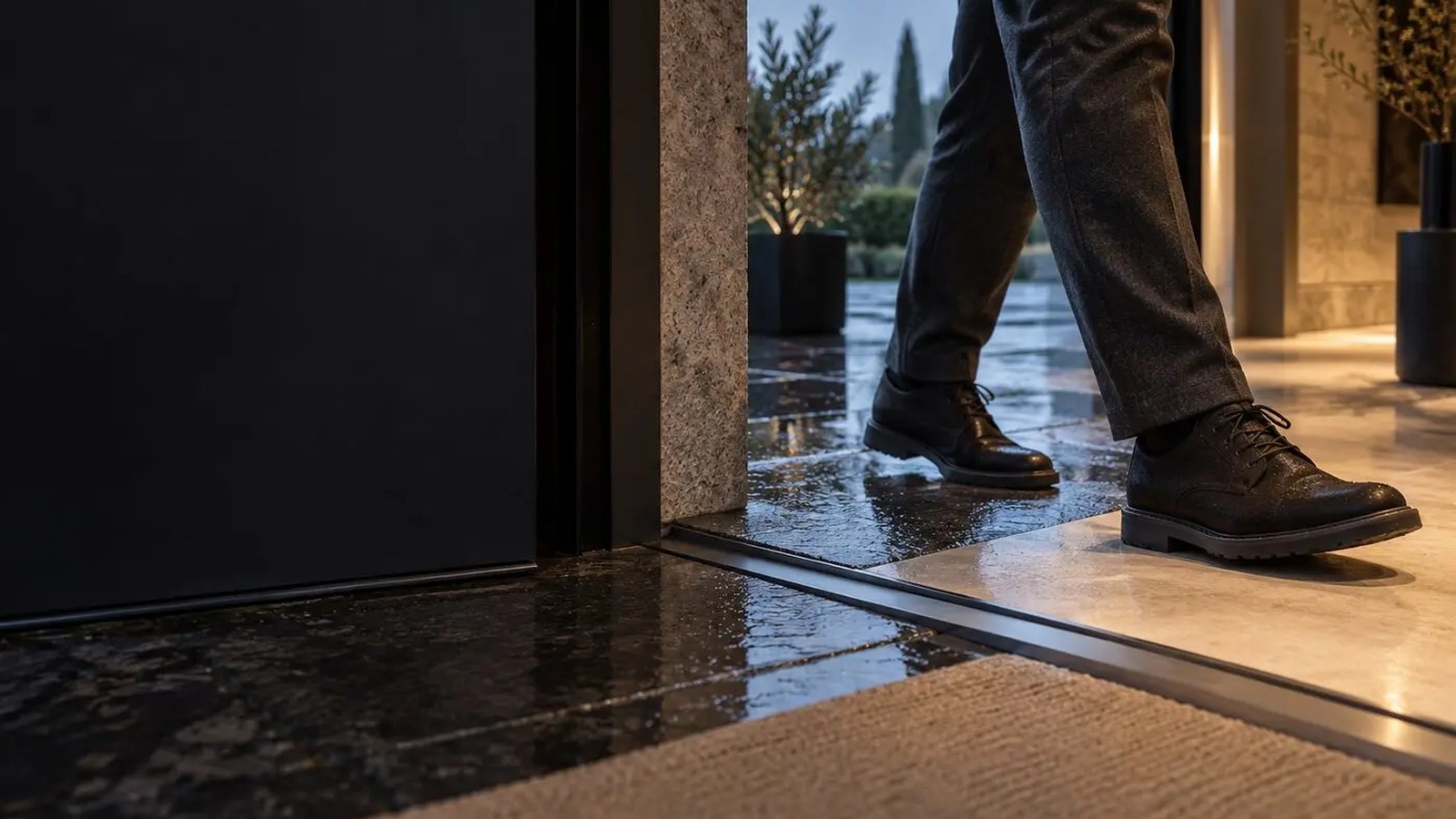
A good entry routine separates three functions: intercept water, remove attached material and let footwear dry without spreading moisture.
Soles contact changing surfaces and conditions.
Tread, moisture and attached material change the load.
The threshold can intercept before wider spread.
Behaviour and maintenance complete the strategy.
Rain increases visible transfer
Water helps particles stick and makes the path of footprints obvious. Acting immediately contains a practical problem before it reaches floors and carpets.
First barrier: absorbent or walk-off surface
A well-sized entrance system can intercept some moisture and dirt. It must be maintained, dried and cleaned; a saturated material cannot keep performing the same way.
Second barrier: behaviour
Removing shoes, cleaning soles or using a dedicated zone are different choices. The best option depends on the home, number of occupants, climate and habits.
Watch persistent moisture
EPA notes that indoor moisture is an important factor in microbial growth. This does not mean one wet shoe automatically creates a problem, but it makes persistent dampness worth avoiding.
Design a wet-entry routine
Matting, a staging area, optional sole cleaning and drying can be planned as one flow. The value lies in reducing friction in everyday behaviour.
A routine for rainy days
Wet-weather entry management is easier when three problems are separated: free water, adhered dirt and where footwear dries. An absorbent or drainable zone near the door, a defined parking point and targeted cleaning when needed keep the task from spreading across several rooms.
Managing persistent moisture
EPA considers moisture control important for indoor environmental quality. At the entrance, avoid persistent accumulation and keep the area used for wet footwear dry and easy to clean.
Sources & evidence