
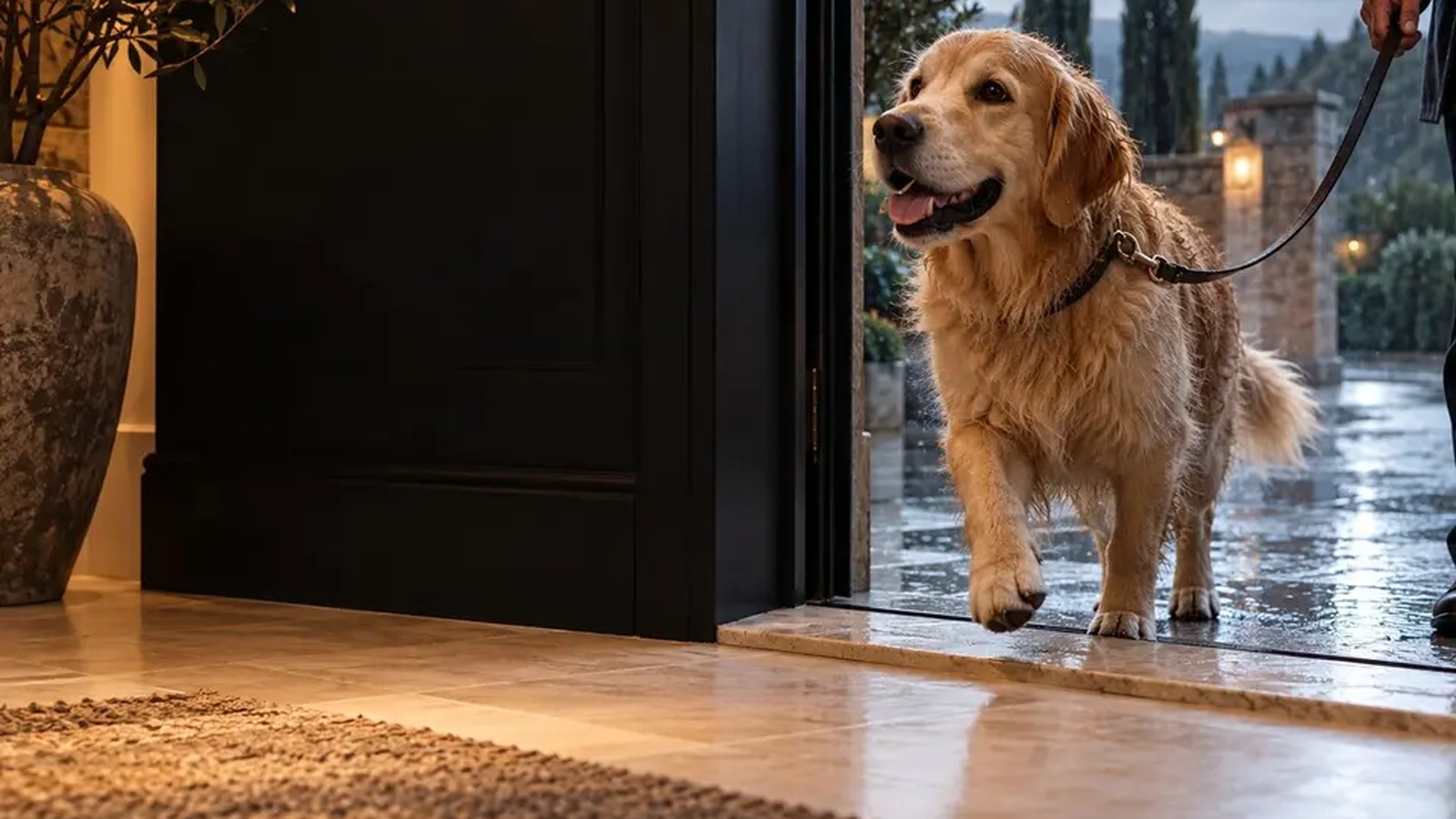
Veterinary guidance points to a simple routine: avoid heavily treated areas where possible, clean or rinse after the walk and dry well.
Surfaces, weather and residues change on every walk.
Material attaches in different amounts and forms.
This is where inspection, cleaning or drying happens.
A simple routine reduces transfer and mess.
Why road salt deserves attention
Ice-melt products can dry or irritate paw pads, and some compounds can cause problems if ingested. Winter entry care therefore concerns both the skin and the dog’s natural tendency to lick its paws.
Cleaning after a winter walk
Lukewarm water, a damp cloth or pet-safe wipes can remove residue. When there is more material on the paws, a thorough rinse makes more sense than using aggressive household cleaners.
Check between toes and pads
Salt, ice and small granules can remain in less visible areas. A quick inspection helps remove residue and reveals cracking or irritation.
Prevention before the walk
Choosing less-treated routes, limiting exposure, using booties when tolerated and veterinary-approved protective products can reduce contact. The right choice depends on the dog and the climate.
A seasonal entry routine
Winter makes the value of an entry routine obvious: inspect, clean, dry and only then move fully into the indoor environment.
After treated roads: what to do
If a dog has walked on surfaces treated with road salt or de-icers, VCA advises removing residues from the paws. In practice this means checking between toes and pads, rinsing when needed and drying well, while preventing the dog from licking material left on the skin.
Prevention and warning signs
Protective balms or booties can help in some settings, although tolerance varies. If the skin becomes irritated, cracked or painful, home care should stop at basic cleaning and veterinary advice should take priority. The issue is protection from irritants, not sterilising the paw.
Sources & evidence
- VCA Animal Hospitals — How To Keep Your Dog’s Paws Safe In Winter
- American Kennel Club — How to Clean and Care for Your Dog’s Paws