
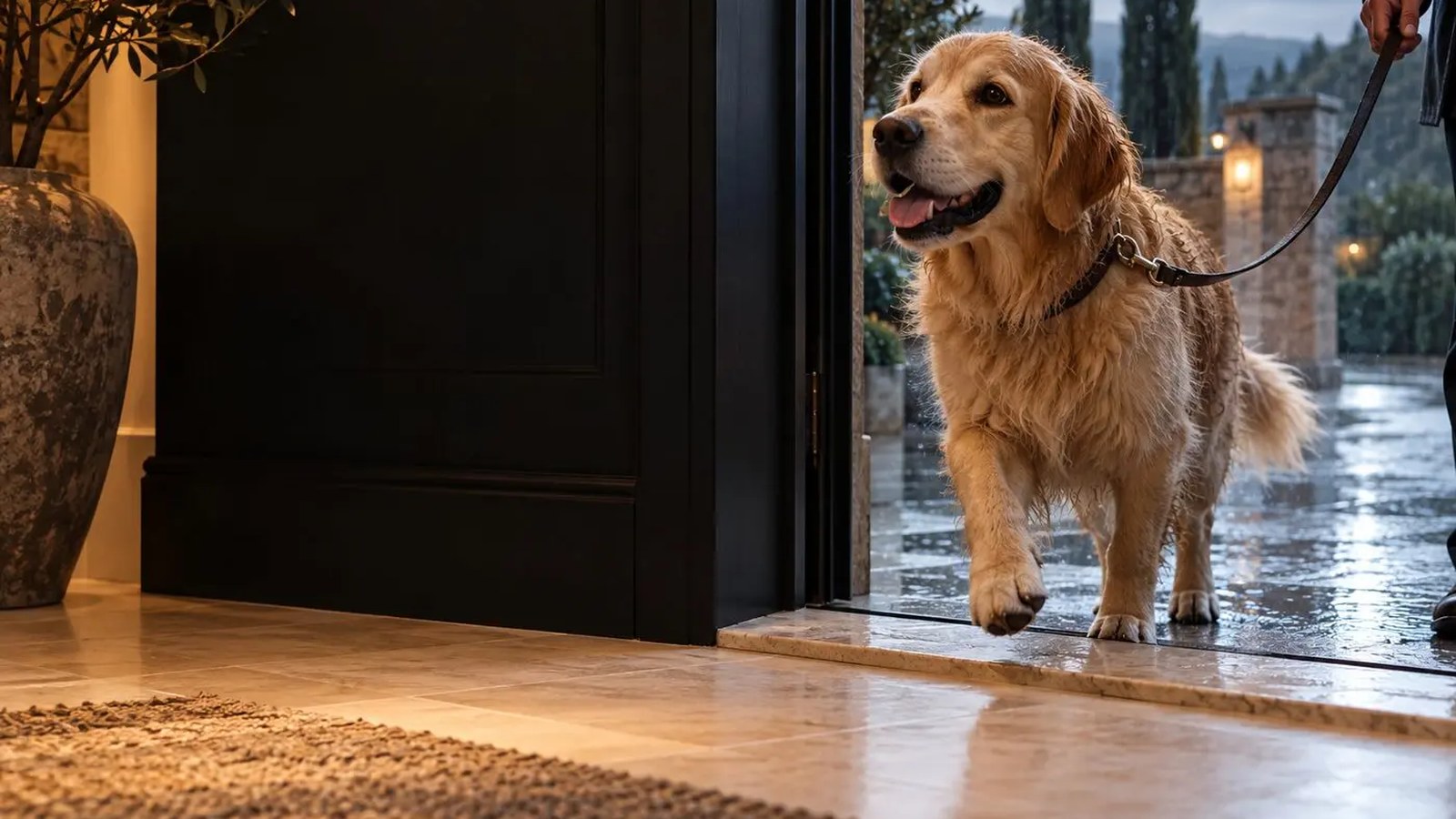
A dedicated entrance area keeps a cloth, cleaning materials and a towel within reach. The routine changes with the weather, route and residue on the dog’s paws.
Rain, mud, snow or dry conditions change what reaches the paws.
Pavement, parks, sand and soil call for different responses.
Tools and the decision to act are concentrated here.
Inspect, clean when needed and dry.
Weather changes what arrives at the threshold
Rain and mud increase the amount of material attached to paws and fur. In winter, road salt and other de-icers may require wiping or rinsing; in dry periods dust and sand may dominate. A single rigid routine for every season is therefore not very rational.
A small functional zone can reduce unnecessary steps
Keeping an absorbent towel, suitable cleaning materials and — when needed — quick access to water near the door reduces the number of movements before cleaning starts. This is a household organisation principle; by itself it does not quantify a reduction in indoor contamination, which would require dedicated research.
The dog is part of usability
Any routine needs to be tolerated by the animal. Short interactions, consistent handling and gradual familiarisation make the process easier to manage. For PET KLINX, animal acceptance is therefore a design requirement to be tested, not something to assume.
Not every return home requires water
If the paws are dry and free of visible residue, inspection may be enough. Light dirt may only need a suitable cloth; mud or stuck-on substances may require rinsing. The principle is proportionality: respond to what the dog has actually encountered.
From a routine to an entry system
“Cleaning the paws” describes an action. Pet Entry Hygiene describes the system around that action: threshold, sequence, tools, behaviour and criteria for deciding when to intervene. HYGEN KLINX is developing within this use setting; its performance still requires dedicated validation.
The practical rule
Rain and mud do not require exactly the same procedure every day. Inspect the actual load, act at the threshold with the least intensive step that is sufficient, and complete the routine by drying the paws. This keeps paw hygiene practical rather than turning it into an excessive ritual.
Sources & evidence
- How To Keep Your Dog’s Paws Safe In Winter — VCA Animal Hospitals
- 5 winter weather skin tips — VCA Animal Hospitals
- 7 Ways to Clean Your Dog’s Paws — PetMD