
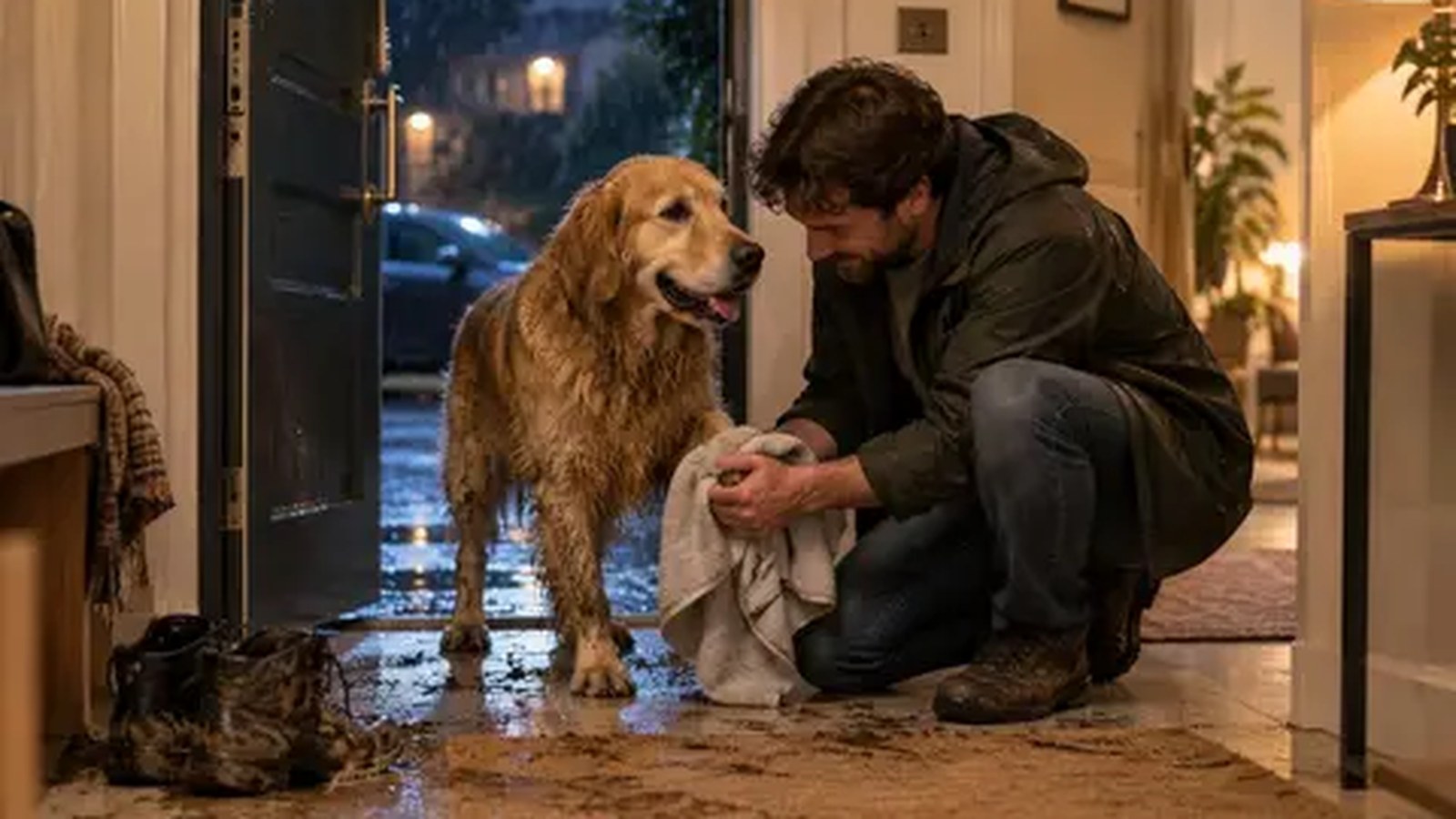
Cleaning without drying leaves the routine incomplete: the final step should be gentle, thorough and comfortable for the dog.
Surfaces, weather and residues change on every walk.
Material attaches in different amounts and forms.
This is where inspection, cleaning or drying happens.
A simple routine reduces transfer and mess.
Why wet paws deserve attention
Rain and washing leave water between pads, toes and fur. The aim of drying is not medical; it is to restore comfort and reduce wet footprints and moisture carried indoors.
Blot rather than scrub
An absorbent towel allows gentle drying. Blotting is often more comfortable than vigorous rubbing, especially if the skin has already been exposed to cold, salt or mud.
Do not forget between the toes
Sand, small residues or water can remain here. Drying can double as a visual check without turning into an intrusive inspection.
When to stop and call the vet
Persistent redness, pain, limping, lesions or excessive licking are not simple entry-hygiene issues. Those signs warrant veterinary advice.
Build drying into the entry sequence
Keeping a towel and cleaning tools in one place makes the behaviour automatic: enter, inspect, clean if needed, dry, then move into the home.
A short routine the dog can tolerate
Keeping a dedicated towel by the door makes the routine predictable: check pads and between the toes, pat dry rather than rubbing aggressively, and let the paw dry before moving on. A repeatable, calm routine is more useful than a long procedure the dog resists.
The limit to remember
Drying completes moisture removal and improves the dog’s comfort. If you notice redness, pain, cuts or persistent licking, seek veterinary advice before repeating or intensifying cleaning.
Sources & evidence
- American Kennel Club — How to Clean and Care for Your Dog’s Paws
- VCA Animal Hospitals — How To Keep Your Dog’s Paws Safe In Winter