
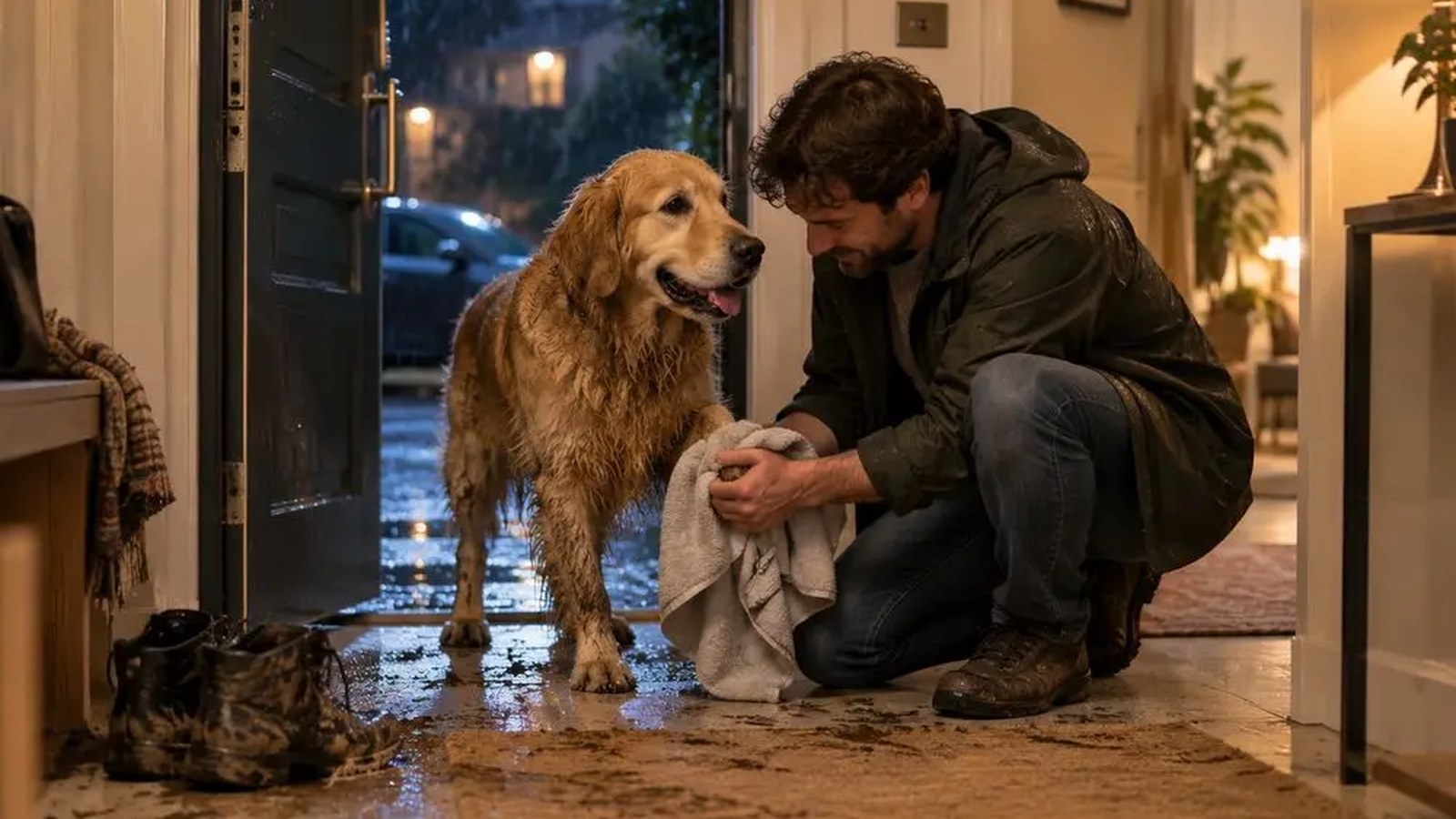
The key is proportionality: inspect, remove visible material, use pet-safe products when needed and dry thoroughly.
Surfaces, weather and residues change on every walk.
Material attaches in different amounts and forms.
This is where inspection, cleaning or drying happens.
A simple routine reduces transfer and mess.
Cleaning dog paws starts with the actual mess
A dry paw after a short walk on clean surfaces does not need the same treatment as a wet, muddy paw. Turning every return home into aggressive disinfection can be unnecessary and irritating; a sensible routine separates inspection, cleaning and situations that need veterinary attention.
When wipes or a damp cloth may be enough
For light surface residue, pet-formulated wipes or a damp cloth can be practical. Avoid household products not intended for animal skin, and check between toes and pads where sand, salt and small debris may remain.
When water and rinsing make more sense
Heavy mud, sticky substances or road-salt residue can justify a more complete rinse. The goal is not to sterilise the paw but to remove material that may irritate the skin or later be licked off.
Drying is part of the routine
Paw cleaning does not end with water. Residual moisture between the toes can make the routine less comfortable, so thorough drying completes the process and gives you a chance to spot cuts, redness or foreign material.
Why the entrance is the logical control point
Keeping a towel, water, pet-safe wipes and drying tools close to the entrance reduces unnecessary movement through indoor spaces. That is the logic of pet entry hygiene: make ordinary care easy at the point where it is needed.
Match the method to the residue
A pet-safe wipe or damp cloth may be enough for light surface dust; water and rinsing make more sense for mud, road salt or sticky residues. The choice should not start with which option “sanitises most”, but with how much material needs to be removed and how well the dog’s skin tolerates the routine.
When cleaning becomes too much
Harsh household products, excessive washing or repeated friction can irritate pads and skin. Veterinary guidance emphasises animal-safe products and paw inspection. For HYGEN KLINX, comfort and skin compatibility are therefore validation requirements, not secondary details.
Sources & evidence
- American Kennel Club — How to Clean and Care for Your Dog’s Paws
- US EPA — Biological Contaminants and Indoor Air Quality