
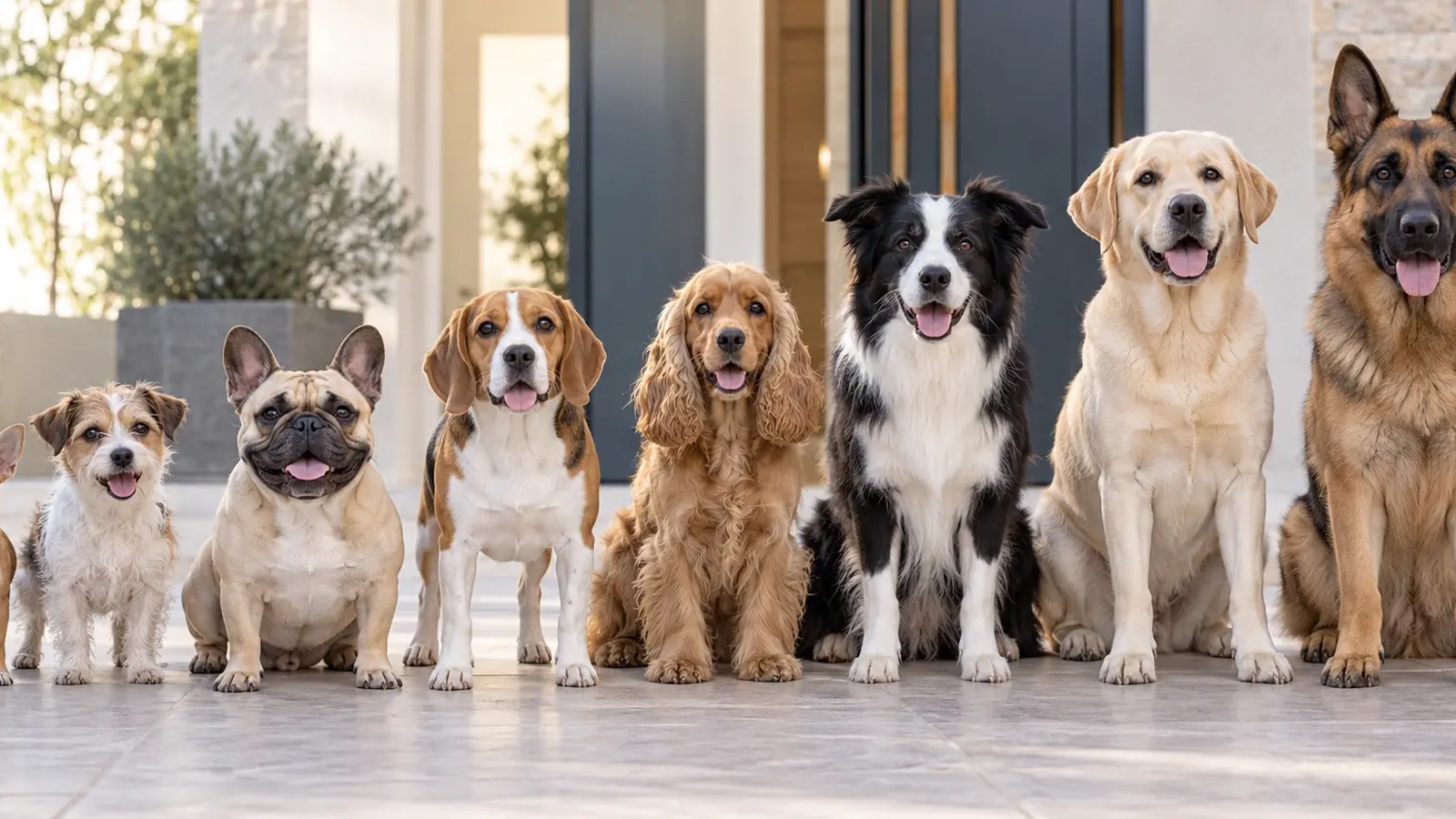
An area near the door makes it easier to inspect, clean and dry paws before moving further into the home.
Surfaces, weather and residues change on every walk.
Material attaches in different amounts and forms.
This is where inspection, cleaning or drying happens.
A simple routine reduces transfer and mess.
Why apartment living changes the routine
Smaller entrance areas call for compact tools and a clear sequence. If towels and pet-safe cleaning products are scattered around the home, the routine becomes less consistent.
Shared areas before the front door
A dog often crosses pavement, lobby, lift and landing. This variety of surfaces makes a quick inspection useful without assuming that every contact represents a health risk.
Reduce the path of visible dirt
Mud and water are the most immediate issues: the farther a dog walks indoors before cleaning, the larger the area that may need attention. Acting at the threshold is mainly an organisational choice.
A short, repeatable routine
A good routine has to work every day: inspect, clean in proportion to the mess, dry. If it requires too many steps, it is more likely to be skipped.
The entrance as a pet micro-zone
A small dedicated area near the door can integrate paw care with home management. It is behaviour design before it is technology.
The entrance as an organising point
In an apartment the distance between the front door, shared corridor, lift and indoor floors is short. Keeping inspection, cleaning and drying close to the entrance reduces movement with wet or dirty paws. That is an organisational benefit, not proof of a health risk.
Shared spaces and repeatable behaviour
For apartment living, Pet Entry Hygiene is mostly about a simple pet-safe routine that people can repeat every day. Veterinary paw-care guidance remains the reference; any dedicated technology would still need separate evidence for comfort, effectiveness and safety.
Sources & evidence
- American Kennel Club — Paw care and cleaning
- Pilot study — Assistance dogs’ paws and users’ shoe soles